The real thing
Watching a sumo tournament in Tokyo
Tokyo hosts three of Japan's six grand sumo tournaments, in January, May and September. Where they are held, what the seats are and how tickets are sold.
Book the Shinjuku sumo show ↗Quick answer
Tokyo hosts three of Japan's six grand sumo tournaments a year, in January, May and September, all at the Ryōgoku Kokugikan. Each lasts 15 days. Tickets are sold through the Japan Sumo Association's English site, and box seats, arena seats and limited ringside seats are the main choices. Book as early as you can, because the tourism organisation advises reserving early.
The three Tokyo tournaments
Japan holds six grand tournaments a year, and Tokyo hosts three of them: January, May and September. Osaka holds the March tournament, Nagoya July and Fukuoka November. Each tournament lasts about 15 days. Every Tokyo tournament is held at the Ryōgoku Kokugikan. If your trip falls outside those three months, there is no tournament in Tokyo, and a show or a practice visit is the alternative.
The arena
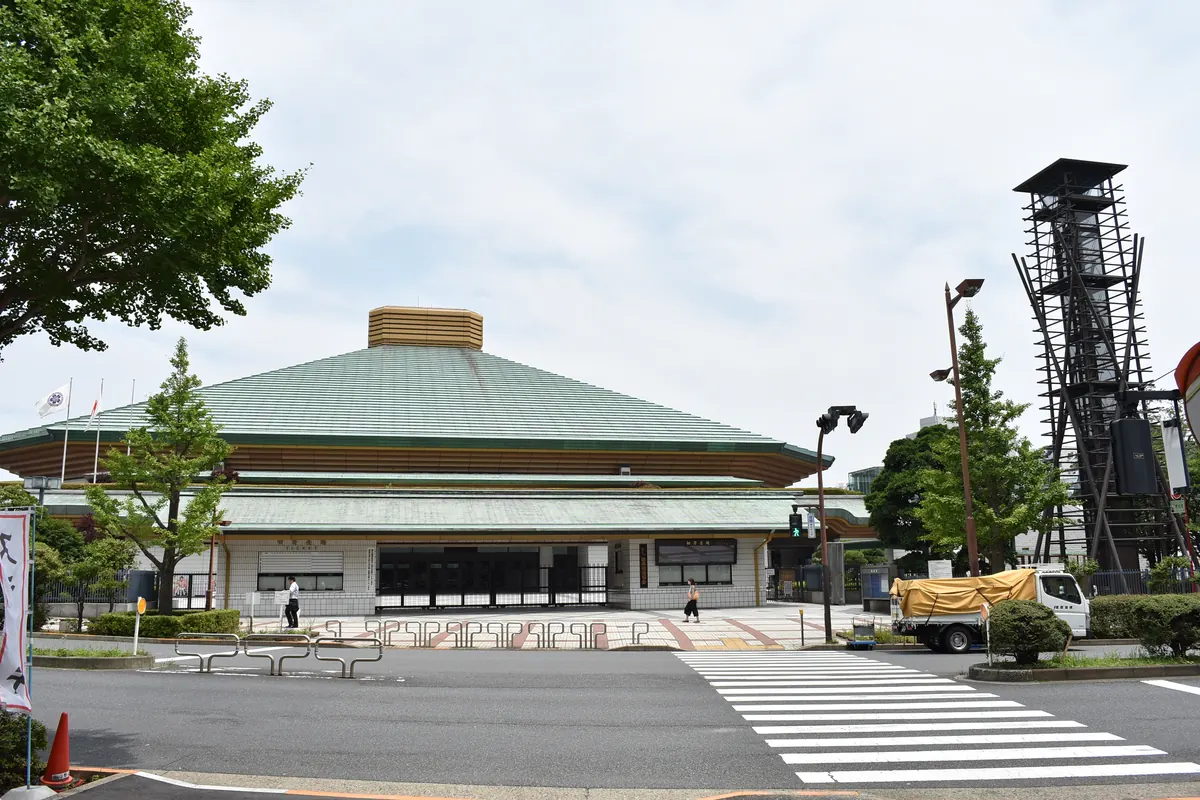
The Ryōgoku Kokugikan is the Japan Sumo Association's headquarters. It includes a small sumo museum, and chanko nabe restaurants, serving the stew wrestlers eat, are clustered around it according to the tourism organisation. Inside, a roof in the style of a Shinto shrine hangs above the ring.
How a tournament day builds
Wrestlers are ranked in six divisions. In a tournament, lower-division wrestlers fight seven times in total, while top-division wrestlers fight once a day. The tourism organisation notes that matches begin with the lower-ranked wrestlers in the morning, and the top wrestlers appear in the late afternoon. That shape matters when you plan the day: the lower divisions open it and the top division closes it, so arriving for the afternoon is how you see the sport's highest-ranked wrestlers.
Seats and what they mean
The tourism organisation lists three kinds of seat. Box seats, called masu-seki, fit up to four people and give a close-up view of the matches. Arena seats on the second level are more affordable and are the usual choice for casual visitors. Ringside seats are limited and, in the organisation's words, even a bit dangerous.
Where tickets come from
The Japan Sumo Association's English site is the place to start. It names its ticket service as Ticket Oosumo English, run through PIA. The tourism organisation says you can book box and arena seats from the association's site and recommends reserving as early as possible, particularly for a box seat. If you cannot get a ticket, it suggests looking for a tour that includes tickets for the matches.
A tournament, a show or a practice visit
A tournament is the sport itself: ranked bouts, a full day and results that change the rankings. A show, like the Shinjuku one, is a demonstration with an MC and no ranking at stake. A morning practice visit, if you can arrange one, shows the training behind both. If January, May or September is on your calendar, the tournament should come first.
Read next: Is a Tokyo sumo show real sumo?
Who this isn't for
A tournament fills a long day in a big arena, so it is a poor fit for visitors who want a short, guided introduction. It is also not for anyone travelling outside January, May and September, because Tokyo has no tournament in the other months. In those cases a show is the realistic way to see wrestlers in a ring in Tokyo.
Frequently asked questions
Which months are the Tokyo sumo tournaments?
January, May and September. Tokyo hosts three of Japan's six grand tournaments a year, all at the Ryōgoku Kokugikan.
How long does a tournament last?
About 15 days. Each of the six grand tournaments runs for 15 consecutive days.
What seats can I book?
Box seats for up to four people, more affordable arena seats on the second level, and limited ringside seats.
Where do I buy tickets?
Through the Japan Sumo Association's English site, whose ticket service runs through PIA. Reserve as early as you can.
Is there a tournament in Tokyo in March or July?
No. March is Osaka's tournament, July is Nagoya's and November is Fukuoka's.
Sources